The Four Yugas — Cycles of Time
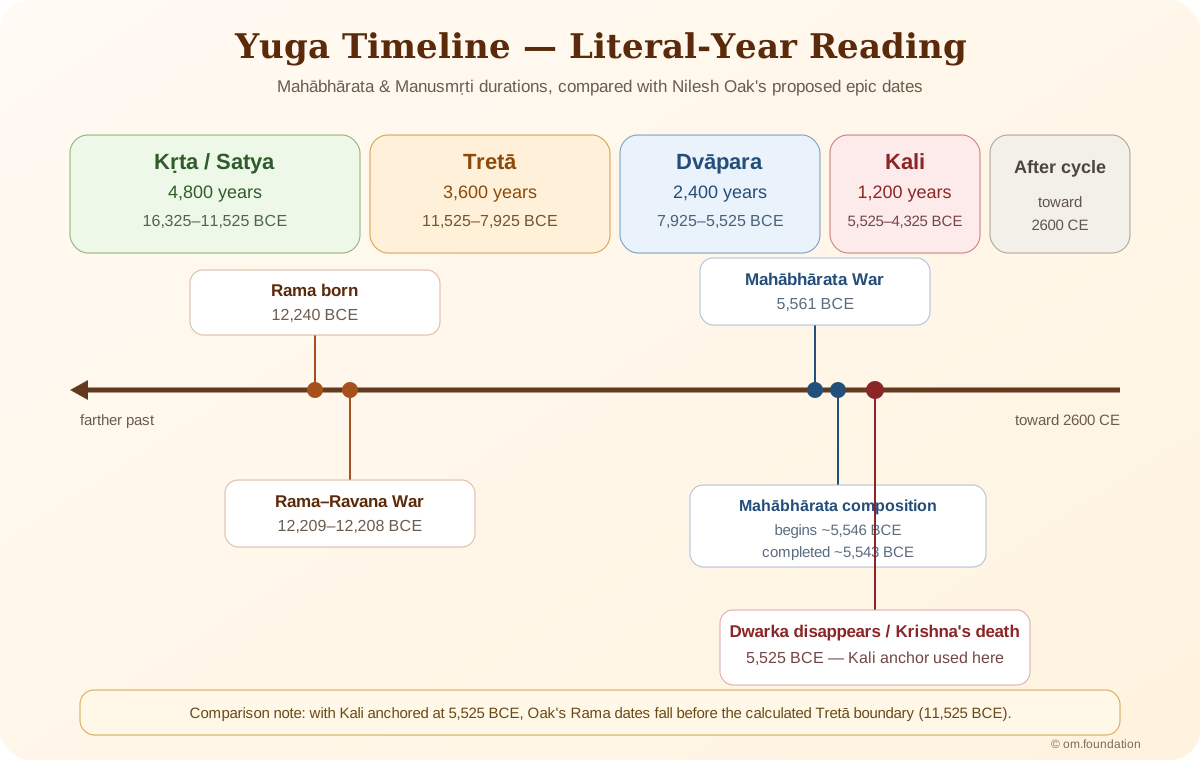
Satya Yuga, Treta Yuga, Dvapara Yuga and Kali Yuga in traditional Hindu (Sanatan Dharma) cosmology.
What Is a Yuga?
Many Hindu cosmological traditions describe time through recurring cycles. A sequence of four Yugas is known as a Mahayuga or Chaturyuga.
The Four Yugas
Satya Yuga: traditionally 1,728,000 human years and associated with the greatest strength of Dharma.
Treta Yuga: traditionally 1,296,000 human years.
Dvapara Yuga: traditionally 864,000 human years.
Kali Yuga: traditionally 432,000 human years and described as the current Yuga in the traditional chronology.
One Mahayuga
The traditional durations follow the ratio 4:3:2:1 and total 4,320,000 human years.
Time
Satya → Treta → Dvapara → Kali → Satya. Hindu cosmological time is traditionally described through recurring cycles.
These durations belong to traditional Hindu cosmology. They should not be presented as measurements established by modern astronomy, archaeology, or geology.