Non-Duality (Advaita Vedanta)
Understanding the relationship between Atman, Brahman, and the experience of apparent separation.
What Does Advaita Mean?
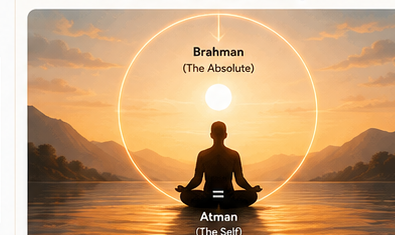
Advaita is a Sanskrit term meaning “not two” or “non-dual.” Advaita Vedanta teaches that ultimate reality is Brahman and that the deepest Self, Atman, is not ultimately separate from Brahman.
Atman and Brahman
Atman refers to the deepest Self, while Brahman refers to absolute reality. In Advaita, liberation is associated with direct knowledge of their essential non-difference.
Maya and Apparent Separation
Advaita explains ordinary experience through the appearance of multiplicity and separation. The term Maya is often used in discussions of how the changing world is experienced without being the final level of reality.
Tat Tvam Asi
The Upanishadic expression Tat Tvam Asi, often translated as “That Thou Art,” is traditionally interpreted in Advaita as pointing toward the unity of the deepest Self and ultimate reality.
One Hindu School Among Several
Advaita is highly influential, but it is not the only Hindu understanding of the relationship between the individual, the Divine, and the cosmos. Other Vedanta traditions include Vishishtadvaita and Dvaita, among others, which interpret these relationships differently.